


I Asked a Nutritionist in Seoul Why Her Patients Keep Asking About Psyllium Husk
April 16, 2026
Something Interesting Is Happening in Korean Clinics. Patients Are Arriving Already Knowing What They Want.
There is a particular kind of patient that nutritionists and dietitians in Seoul talk about when the conversation turns to psyllium husk. Not the patient who comes in knowing nothing and leaves with a list of recommendations. The other kind. The one who has already done the research, already read about psyllium’s fiber content and its effects on digestion and cholesterol, and arrives asking not whether they should take it but which product to buy and how much.
That shift, from practitioner-led recommendation to consumer led enquiry, tells you something important about the state of psyllium awareness in South Korea right now. The ingredient has reached a point of consumer recognition that most natural fiber supplements never achieve. People are searching for it by name. They are buying it without waiting to be told. And they are asking nutritionists not to introduce them to psyllium but to help them use it correctly.
For supplement brands and food manufacturers serving the Korean market, and for the procurement teams behind them who are sourcing psyllium husk from India, this matters. It means the consumer-facing demand is already established. The question is no longer whether Korean consumers want psyllium products. The question is whether your brand can supply a quality that matches the expectation that now exists in this market.
1. What Korean Consumers Are Actually Looking For
Korean health consumers are detailed in their expectations. They are not just buying a fiber supplement. They are evaluating the ingredient’s origin, its certification, its purity level, and in many cases the testing documentation behind it. This level of scrutiny is not unusual among Korean supplement buyers and it has a direct implication for the sourcing standards that brands serving this market need to maintain.
The specific health goals that drive psyllium purchases in South Korea cluster around a few themes. Digestive regularity is the most common, but it runs alongside concerns about gut microbiome health that have become very mainstream in Korean health culture over the past five years. Cholesterol management is a secondary driver, particularly among consumers aged 40 and above who are navigating the same cardiovascular risk concerns that make psyllium popular in the US market. Weight management plays a role too, particularly among younger urban consumers who are looking for satiety support that comes from a natural ingredient rather than a stimulant.
What is notably Korean about the market is the format preference. Korean consumers have a strong affinity for sachet-format supplements. Single serve stick packs that can be mixed into water or juice fit perfectly into the Korean morning routine and into the culture of carrying supplements to the office or gym. Brands that have introduced psyllium in this format have found much stronger uptake than brands that brought psyllium to Korea in the jar with a scoop format that dominates the US market.
What This Means for Ingredient Sourcing
- Psyllium for the Korean sachet format needs a fine powder grade. Whole husk does not dissolve well in the small volume of liquid used in a stick pack. Psyllium husk powder at 98% purity with a defined fine particle size is the specification most Korean supplement manufacturers work toward.
- Neutral taste is a non negotiable for Korean consumers. Psyllium at high purity grades has a very mild flavour that works well in the formats Korean consumers prefer. Lower purity grades can carry more of the seed coat’s slightly earthy notes, which Korean consumers notice and react to negatively.
- Korean brands expect batch to batch consistency not just in purity but in sensory properties including colour and taste. A batch that is technically within specification but visibly different in colour from the previous shipment will generate questions from Korean quality control teams that take real time to resolve.
2. The USA and Canada Are Having a Similar Conversation, Just in a Different Room
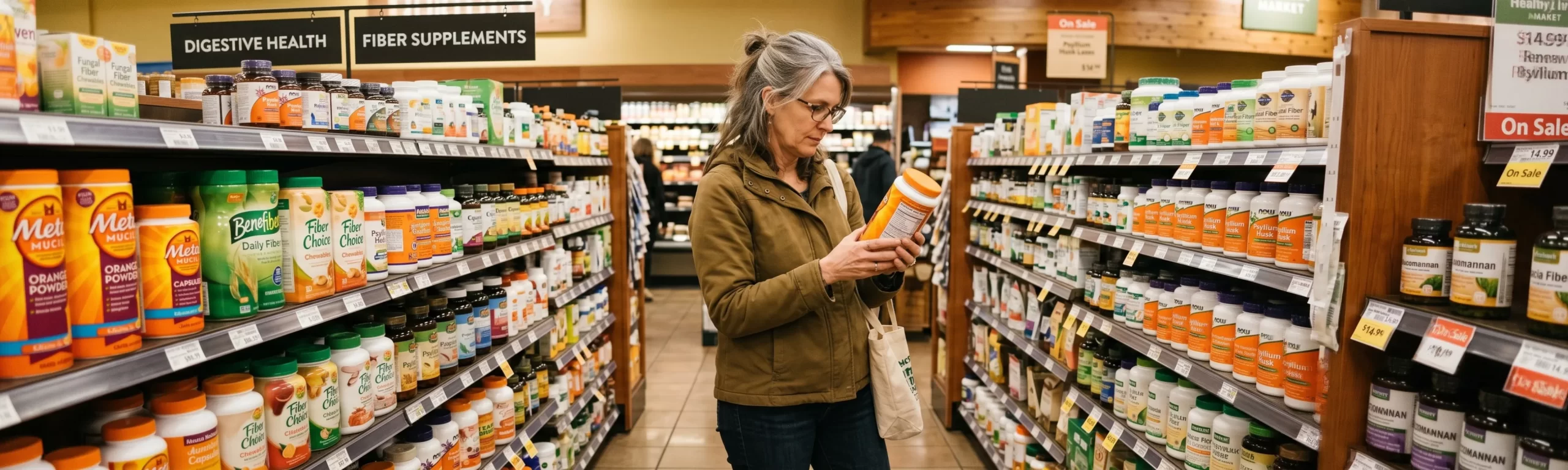
The psyllium awareness curve in the USA is further along than in Korea simply because the product has been on American pharmacy shelves for decades. But the nature of that awareness is changing. Older American consumers knew psyllium as Metamucil, a product their parents or grandparents kept in the medicine cabinet. Younger American consumers are discovering psyllium through a completely different channel: nutrition podcasts, gut health influencer content on social media, and research based wellness platforms that explain the science of the gut microbiome.
This generational rediscovery of psyllium as a sophisticated gut health ingredient rather than an old-fashioned laxative has done something commercially interesting. It has created demand for premium, single-ingredient psyllium supplements that lead with the gut microbiome story and the cholesterol claim rather than the bowel regularity messaging. These products tend to be positioned at a higher price point, they tend to source at 98% or 99% purity, and the brands behind them are serious about the quality of their raw ingredient supply.
In Canada the pattern is similar. Canadian health consumers are health-literate, they trust natural health products with substantiated claims, and the Health Canada NHP framework gives psyllium products a regulatory pathway that supports credible health claim communication. Canadian supplement brands that have built their psyllium products on strong clinical positioning and clean sourcing have found a receptive market.
What Unites Korean, American and Canadian Psyllium Consumers
- All three markets are converging on the same consumer profile: a health aware adult who has done their own research, knows they want psyllium specifically rather than just a generic fiber supplement, and is willing to pay a premium for a product that backs its quality claims with real documentation.
- Ingredient transparency has become a genuine purchase driver across all three markets. Brands that can trace their psyllium to a named, certified manufacturing facility in Gujarat have a credibility advantage over those who cannot.
- Clinical substantiation matters. The FDA health claim in the USA, Health Canada’s NHP claims framework, and South Korea’s functional food claim system all give psyllium a regulatory pathway for health communication that most natural ingredients cannot access. Brands that understand and use this correctly build more durable market positions.
3. The IBS Connection That Is Bringing New Buyers Into the Category
One development that has expanded the psyllium market in all three countries over the past few years is the growing clinical recognition of psyllium’s usefulness in managing irritable bowel syndrome. IBS affects a significant portion of the population in the USA, Canada, and South Korea, and it is significantly underdiagnosed in all three countries. As awareness has grown, so has the population of people looking for evidence based dietary interventions.
Psyllium is one of the very few dietary fiber supplements with clinical evidence for benefit in both constipation-predominant and diarrhea predominant IBS. That bidirectional benefit is unusual and clinically meaningful. Gastroenterologists and dietitians in all three markets have been recommending psyllium to IBS patients with increasing frequency over the past decade, and a portion of those patients become long-term users who eventually start sourcing psyllium themselves rather than relying on branded products.
For supplement brands, this creates a category that is expanding through legitimate clinical pathways rather than through trend-driven marketing. Products positioned for digestive health and IBS support sit in a different commercial conversation from general wellness products. They require a higher sourcing standard, more careful formulation, and communication that is honest about what the ingredient can and cannot do.
4. Sourcing Psyllium for Consumer-Facing Supplement Brands in Korea, USA and Canada
Consumer supplement brands serving all three markets share a set of sourcing requirements that are relatively consistent. They need psyllium at 98% purity or above. They need a full and accurate Certificate of Analysis from a properly accredited testing laboratory. They need allergen declaration and heavy metal testing documentation. They need a supplier who can maintain supply continuity across the year without the kind of quality variation that creates batch-to-batch product inconsistency.
What varies between markets is the regulatory documentation package. US brands need FDA facility registration confirmation and Prior Notice compliance. Canadian brands need evidence of GMP compliance under Health Canada’s NHP framework. Korean brands need documentation that passes MFDS requirements and often request Korean-language product descriptions that their customs broker can work with.
At Prime Psyllium we supply all three markets from our Palanpur facility and we understand the documentation differences. We prepare destination specific paperwork for every shipment, we can provide COA history from multiple batches for supplier qualification, and we keep our certifications current because we know that consumer facing brands in these markets cannot afford a supply chain that creates regulatory complications.
5. A Note on Why the Human Side of This Matters
We started this blog with a nutritionist in Seoul because it is easy to forget, in a conversation about grades and documentation and supply chains, that at the end of this whole process there is a person who is trying to manage their health. Someone whose digestion is uncomfortable. Someone who was told by their doctor that their LDL needs attention. Someone who read about the gut microbiome and decided to take their fiber intake seriously.
That person is why the quality of the psyllium in the supply chain matters. Not abstractly. Practically. The swelling factor of the fiber they consume each morning determines whether it does what it is supposed to do for their body. The purity of the raw material that went into their supplement determines how much active fiber is actually in each serving. These are not quality assurance technicalities. They are the reason we take this work seriously.
If you are building a supplement brand that serves these consumers in South Korea, the USA, or Canada, we would welcome a conversation about what you are building and how we can support it properly.
Ready to Source the World’s Finest Psyllium?
Quality • Purity • Global Reach
www.primepsyllium.com | [email protected]
Prime Psyllium — India’s Trusted Psyllium Manufacturer and Global Exporter
