


Gluten Free Baking With Psyllium Husk: What Food Brands in Brazil, Canada and South Korea Are Getting Right
April 11, 2026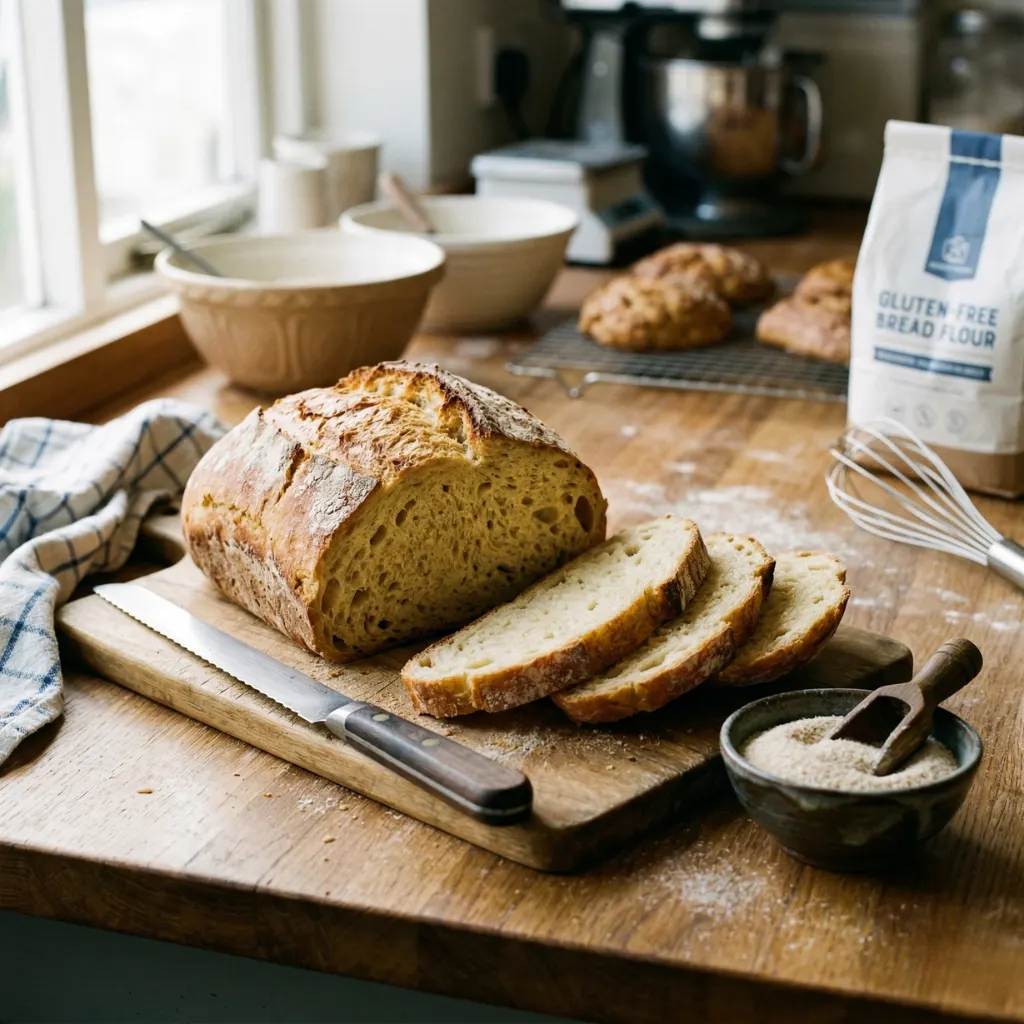
For Years, Gluten Free Bread Was the Product Everyone Had to Eat But Nobody Actually Wanted. Psyllium Changed That.
Anyone who has spent time in the gluten-free food business knows the problem that defined the early years of the category. You could make bread without gluten. You could make it with rice flour, tapioca starch, potato starch, chickpea flour. But what you ended up with was usually dense, crumbly, dry within a day, and texturally nothing like the bread it was supposed to replace. Gluten-free consumers bought it because they had to, not because they wanted to.
Psyllium husk powder did not solve every problem in gluten-free baking, but it solved the most important one. It created the binding, the elasticity, the gas retention that makes bread behave like bread. The difference in a gluten-free loaf made with psyllium versus one made without it is not subtle. It is the difference between something that falls apart when you slice it and something that holds together, has a genuine crumb structure, and actually tastes like it belongs at the breakfast table.
Food brands in Brazil, Canada, and South Korea have been figuring this out and the ones who got it right early have built real competitive advantages in their markets. This blog covers how psyllium works in gluten free baking at a practical level, what grade and format food manufacturers should be sourcing, and what suppliers in this category need to get right.
1. Why Psyllium Works in Gluten Free Baking When Other Alternatives Fall Short
Gluten is a protein network that forms when wheat flour is mixed with water. It creates an elastic matrix that traps carbon dioxide from yeast fermentation, allowing bread to rise and maintain its structure during baking. Remove gluten from the equation and you lose that entire structural system. Gluten free flours do not form the same network. The dough cannot hold gas. The bread cannot rise properly. The result collapses.
Psyllium husk powder works in this context because of what it does when it meets water. The soluble fiber in psyllium absorbs a significant multiple of its weight in water and forms a thick, cohesive gel. That gel acts as a structural binder in gluten free dough, giving it elasticity and cohesion that no other commonly available food ingredient replicates as effectively. It is not identical to gluten in its properties, but in the context of gluten free baking it does enough of the same job to produce results that consumers genuinely enjoy.
The practical difference between using psyllium and not using it shows up in four ways. First, the dough holds together during mixing and shaping rather than crumbling. Second, the bread rises more consistently because the structure can trap fermentation gases. Third, the crumb is more open and less dense because the psyllium gel distributes gas bubbles more evenly. Fourth, the finished product stays softer for longer because psyllium retains moisture in the crumb structure, slowing the staling that makes most gluten-free bread unpleasant by day two.
What Food Technologists Working With Psyllium Should Know
- Psyllium husk powder should typically be used at between 1% and 3% of total flour weight in gluten-free bread formulations. The right level depends on the flour blend and the desired texture. Start at 1.5% and adjust based on trial results.
- Hydration matters. Psyllium needs adequate water to form its gel before it can do its structural job. If your gluten free dough is too dry, the psyllium will not activate fully and the structure will be weaker than expected.
- Particle size affects performance. Superfine psyllium husk powder distributes more evenly through the dough and produces a finer, more consistent crumb than coarser grades. If you are producing a premium product and texture is a priority, the powder grade is worth the premium over whole husk.
- Psyllium interacts with other hydrocolloids in complex ways. If your formulation uses xanthan gum, guar gum, or HPMC alongside psyllium, the combined hydration demand changes. Your food technologist should run trials before finalising the formula.
2. What the Brazilian Gluten-Free Market Is Building
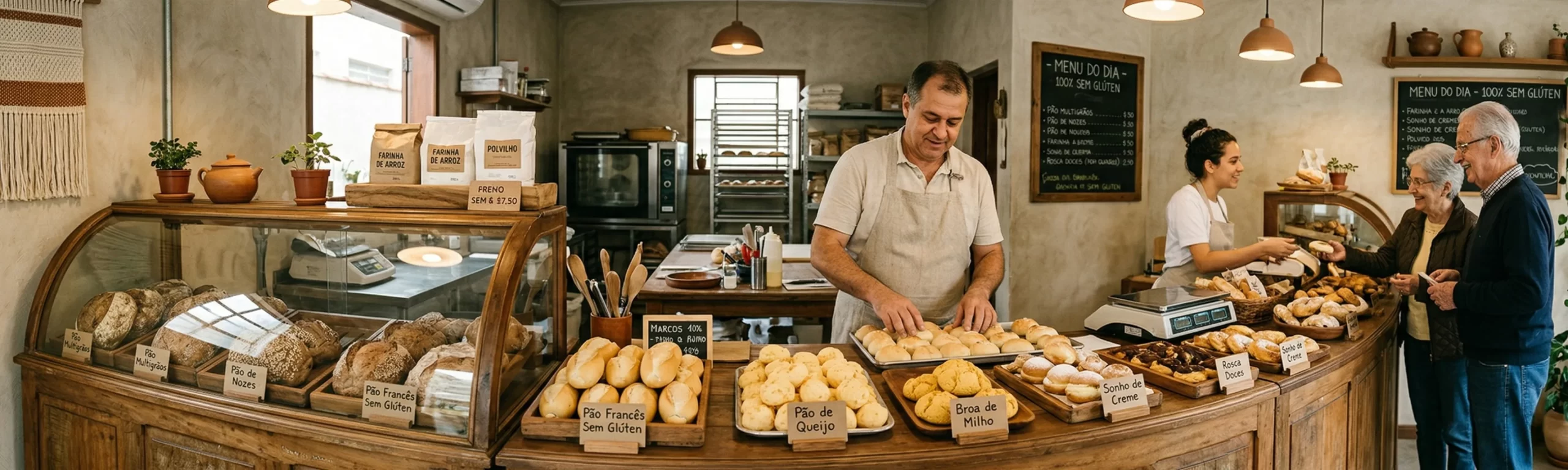
Brazil’s gluten-free food market has grown faster than most people in the industry anticipated. The country has one of the highest rates of celiac disease diagnosis in Latin America, and awareness of the condition has increased significantly as testing has become more accessible. Beyond celiac disease, the broader consumer appetite for gluten free products as a lifestyle choice has also grown, driven by the same health consciousness that has made Brazil one of the most active supplement markets in the world.
Brazilian food manufacturers entering the gluten-free category quickly learned that the quality bar was higher than they expected. Brazilian consumers who need to eat gluten free for medical reasons are experienced at evaluating gluten free products and they are not patient with poor texture or flavour. They have tried enough dry, crumbly, bad-tasting gluten-free bread to know immediately when a product is good. Brands that invested in formulation quality, including the right use of psyllium, built loyal customer bases. Brands that cut corners on ingredients struggled to hold repeat buyers.
For Brazilian food manufacturers sourcing psyllium husk powder, the practical requirements are 95% food grade purity or above, FSSAI and HACCP certification from the supplier, and consistent particle size within a defined specification. Brazilian buyers also tell us that they value reliable supply continuity, particularly around the harvest season when psyllium prices and availability can shift. Establishing a supply relationship before you need large volumes, rather than going to the spot market when production is already scheduled, is a much more stable approach.
What Brazilian Food Buyers Typically Look for from Their Psyllium Powder Supplier
- 95% purity food grade psyllium husk powder as the baseline specification for most baking applications
- Consistent particle size within specification across batches, since variation in powder fineness directly affects dough behaviour and final product quality
- FSSAI and HACCP certification as the minimum quality credential expected for food ingredient imports into Brazil
- ANVISA compatible documentation that supports the importer’s regulatory compliance process in Brazil
- Reliable quarterly supply with confirmed lead times, particularly important for bakery production schedules that cannot accommodate spot shortages
3. Canada’s Gluten Free Food Industry and What It Demands
Canada’s approach to gluten free food is shaped by a regulatory framework that is stricter in some respects than the US equivalent. Health Canada’s regulations on gluten-free labelling require that products carrying the claim contain less than 20 parts per million of gluten, and Canadian consumers have become sophisticated about reading labels and trusting certification organisations. Gluten free food brands operating in Canada need ingredient suppliers whose products genuinely support a clean gluten-free supply chain.
Psyllium husk is a naturally gluten free ingredient. There is no gluten in Plantago ovata. But the risk in a gluten free supply chain is not just the ingredient itself, it is cross-contamination during processing. A psyllium processing facility that also handles wheat or other gluten-containing grains introduces a real contamination risk. Canadian gluten-free food brands ask suppliers about this directly, and they should.
At Prime Psyllium, our Palanpur facility processes psyllium husk exclusively. We do not handle wheat, barley, or other gluten-containing grains in the same facility. For Canadian buyers producing gluten free certified products, this is an important part of the supply chain conversation and we are transparent about it.
Canadian food manufacturers also tend to be very thorough about supplier audits and documentation. Asking for a facility overview, a copy of the HACCP plan, and recent third party audit results is not unusual from a Canadian buyer. We accommodate those requests because we think a buyer who wants to understand our facility is a buyer who takes quality seriously, and those are the buyers we want to work with.
4. South Korea’s Growing Appetite for Gluten-Free Products
South Korea might not be the first country that comes to mind when you think about the gluten free food market, but the category has been growing there for reasons that are specific to the Korean consumer context. Korean consumers are among the most health literate in Asia. They follow nutritional research, they read ingredient labels, and they are receptive to food concepts that come with a credible health rationale.
The gluten free movement in South Korea has been driven less by celiac disease diagnosis, which is relatively uncommon in East Asian populations, and more by the broader clean-eating and functional food consumer trend. Korean consumers who have reduced their wheat intake for general health reasons, or who are following specific dietary protocols, have created a market for premium gluten-free products that is smaller than Brazil or Canada but growing quickly and willing to pay for quality.
Korean food brands producing gluten free products tend to use psyllium husk powder in the same way as their counterparts in other markets, but with a particular emphasis on texture. Korean food culture values texture very specifically. A gluten free bread or pastry that does not have the right chew and mouthfeel will not succeed in the Korean market regardless of its nutritional profile. Psyllium, used correctly, contributes meaningfully to the texture profile that Korean consumers expect.
Practical Notes for Sourcing Psyllium for the South Korean Food Market
- South Korean food imports require documentation that conforms to Korean food safety regulatory requirements under the Ministry of Food and Drug Safety. Psyllium husk powder imported for food use needs the standard set of export documents plus any product-specific requirements that your Korean customs broker confirms
- 95% food-grade psyllium husk powder is the typical specification for Korean food manufacturing applications
- Korean food brands often request allergen declaration documentation that goes beyond what some other markets require, including specific statements about the processing environment and any co packed ingredients
- Particle size specifications for Korean food applications tend to be precise. Agree on a defined particle size distribution with your supplier before the first commercial shipment and confirm that it is consistently met across batches
5. Sourcing Food-Grade Psyllium Husk Powder from Prime Psyllium
We supply food-grade psyllium husk powder to food manufacturers in Brazil, Canada, South Korea, the USA, and other markets from our facility in Palanpur, Gujarat. The grades we supply for food applications are 95%, 90%, and 85% purity, with 95% being the most common for baking and functional food use. We also supply finer powder specifications for buyers whose formulation requires a specific particle size distribution.
Every batch is tested before dispatch. Every shipment comes with a full Certificate of Analysis, Certificate of Origin, Phytosanitary Certificate, and HACCP compliance documentation. We prepare documentation specific to the destination country rather than using a one-size-fits-all template, because we know from experience that the details matter at customs.
If you are a food manufacturer in Brazil, Canada, or South Korea sourcing psyllium husk powder for gluten-free or fiber fortified food production, we would be glad to send samples with a full COA, answer your technical formulation questions, and give you an honest assessment of whether our product is the right fit for your application. We would rather have that conversation upfront than discover a mismatch after an order has been placed.
Ready to Source the World’s Finest Psyllium?
Quality • Purity • Global Reach
www.primepsyllium.com | [email protected]
Prime Psyllium — India’s Trusted Psyllium Manufacturer and Global Exporter
